How technology helps Feeding India track every meal
When we picture a large-scale feeding program, we picture a warm plate or a child's hands cupped around a bowl. We rarely picture an app, but the questions behind each meal matter just as much: did a meal reach the child, did it arrive on time, was the quantity right, and could our teams respond if something went wrong?
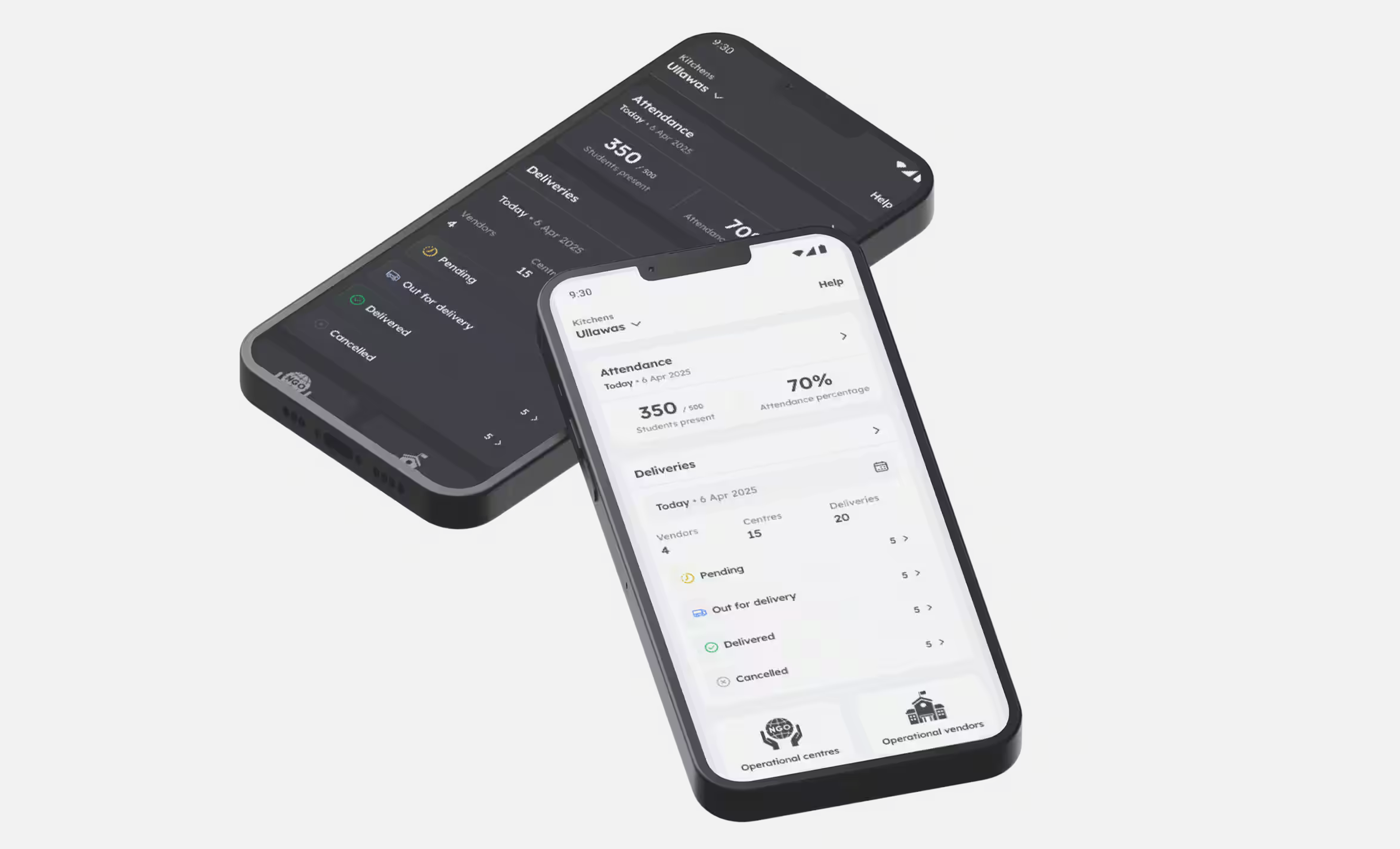
For years, many of these answers depended on phone calls, paperwork, and the goodwill of people already handling complex day-to-day work. Today, more of that information sits in one place: the Feeding India App, built for the NGO and vendor partners who help deliver meals every day.
The app brings different parts of the process into a shared system. NGO and vendor partners can coordinate food movement from the kitchen to the centre, record updates, share feedback, and help internal teams understand what is happening on the ground. The app supports their work by making each step easier to track, review, and improve.
Counting every child, tracking every meal
Earlier, answering attendance-related questions often meant NGO partners maintaining manual registers, adding one more task to teams already focused on children's education, wellbeing, and development.
To reduce that burden, Feeding India developed a Facial Recognition Attendance Technology system, called FRAT. NGO partners who choose to use it can record attendance digitally, so each child present is counted once and attendance reports are easier to maintain and review. The system was designed around partner use, with NGO partners retaining access to their attendance data and using it to monitor participation at their centres.
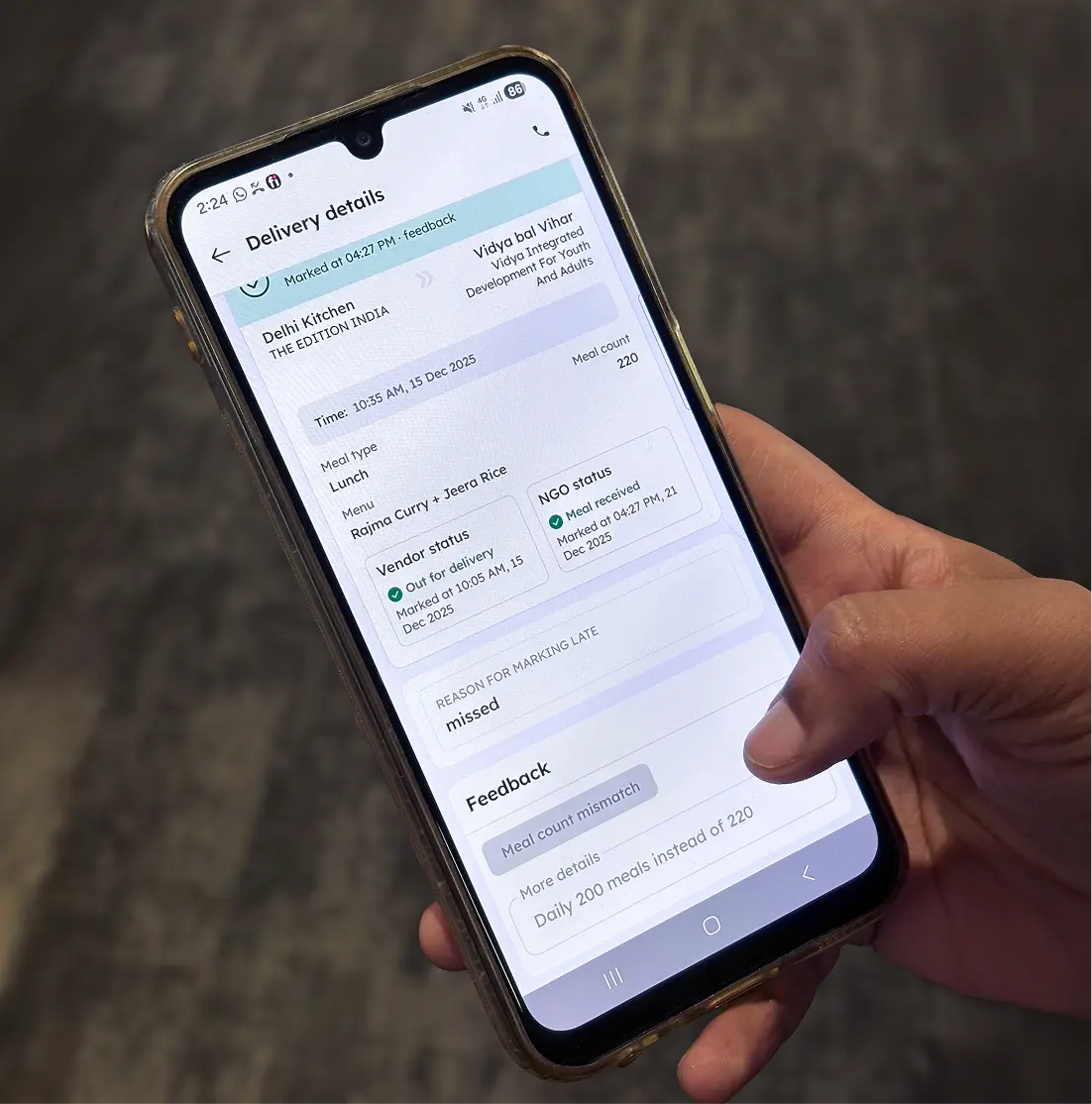
Attendance, however, is only one part of the picture. After every order, NGO partners can also share feedback on the meal itself, including quantity, quality, timeliness, and other meal-related inputs. These details help our teams see where delivery is working smoothly and where a centre, vendor, or route may need support. Feedback that once stayed scattered across calls and messages can now guide timely action.
Walking alongside our partners
Every new NGO or vendor partner who joins can help us reach more children, but onboarding cannot take so long that meals are delayed. At Feeding India, we have worked to make this process simpler, with less paperwork and fewer back and forth.
Vendor partners carry real operational responsibility. They plan supply, manage teams, run kitchens, and maintain accounts. Through the app, they can manage kitchen operations and raise invoices through the same app that tracks food quantities. This gives both vendors and internal teams a clearer record of what was prepared, delivered, and billed.
Meal requirements also change from day to day. Sometimes an NGO centre needs additional food. Sometimes a centre is closed and needs none. Earlier, communicating these changes could be slow, and a missed update could lead to food going to waste. These requests can now be raised and addressed through the app in real time.
More than anything, the app helps us stay closer to our NGO and vendor partners. When a partner needs support, our teams can see the issue sooner and respond with more context. That matters because every operational detail, from attendance to quantity changes, connects back to the same purpose: making sure children receive the meals.
Technology that strengthens trust
Feeding India runs on the trust of its supporters, NGO partners, and vendor partners, all working to serve children through our Daily Feeding Program.
At Feeding India, we believe technology strengthens that trust when it gives people clearer information. The Feeding India App helps track meals, attendance, feedback, kitchen operations, invoices, and changing food requirements in one system. It gives our partners and teams a shared view of the work, so decisions are based less on assumption and more on what is actually happening.
That is how our vision of a malnutrition-free India moves forward: not only through more meals, but through better systems that help every meal reach.