Why child nutrition matters for India's future
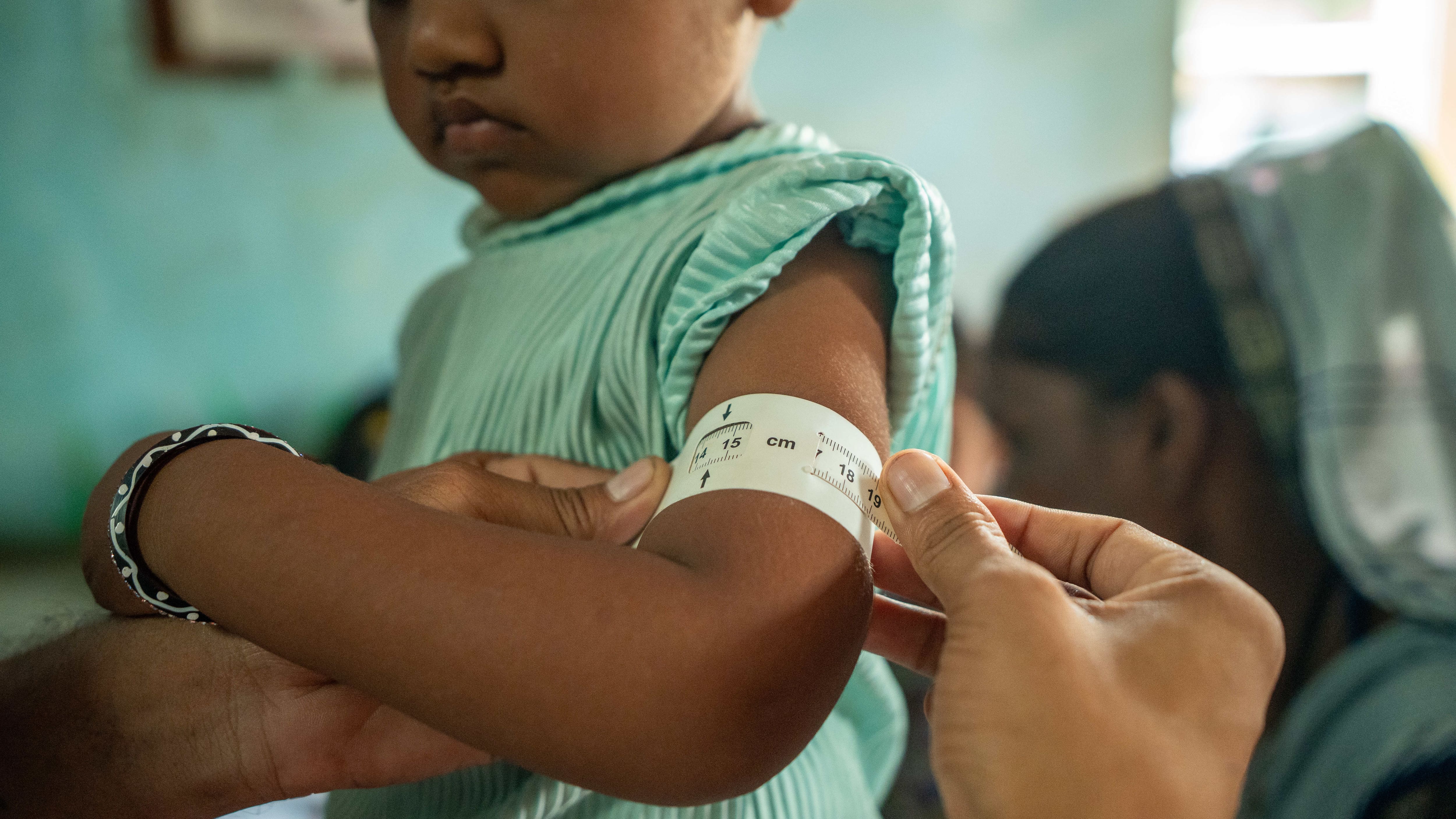
In the clinical rooms of pediatricians across India, a simple tape goes around a child's upper arm. This is the mid-upper-arm circumference (MUAC) tape. If the tape reads in the red, the child is severely malnourished and faces an immediate, life-threatening risk from even ordinary infections. Across India, that red reading is the daily reality for roughly 5.2% of children under five.
But the tape only catches what acute weight loss looks like today. It cannot see the slower, deeper damage that shapes many millions more. To capture the complete picture, public health surveys like National Family Health Survey (NFHS-6) keep a track a triad of anthropometric markers: wasting, stunting, and underweight.
The damage that doesn't show: stunting, wasting, and underweight can limit a child's potential
The challenge in addressing this triad lies in how these conditions manifest. Wasting is the visible thinning of a child's body during a food crisis or illness that demands urgent medical attention. Conversely, stunting and underweight states are insidious because they do not look like an emergency to the casual eye. A stunted child does not look starved; they may merely look small for their age. They might be in school, playing, and helping their family, masking a quiet physiological crisis.
The structural damage of early childhood undernutrition lies precisely where the eye cannot see, setting a child's physical path before they even speak. This hidden damage begins with stunting (low height-for-age, indicating chronic malnutrition), which can lock in the long-term consequences of nutritional deprivation during the first 1,000 days of life. Because the brain and body develop on a fixed biological timeline, a stunted seven-year-old might put on weight later with better food, but they may never regain the height they missed, nor will they fully recover the loss in brain development.
Running parallel to this is wasting (low weight-for-height, indicating acute malnutrition), which can cause rapid muscle loss and immediately compromises the immune system when the body needs it most. Compounding these issues is underweight, a composite measure reflecting a mix of both chronic and acute deficits that a child who is underweight may be stunted, wasted , or both.
The combined weight of these three distinct forces can influence a child's performance in school, physical development, and lifelong susceptibility to metabolic diseases.
The intergenerational cycle: malnutrition traps successive generations in a closed loop
When these physiological deficits remain unaddressed, they can repeat across generations through a predictable biological cycle. High rates of maternal anemia, low body mass index among women of reproductive age, and poor adolescent nutrition feed directly into child undernutrition, creating a self-sustaining loop.
This sequence repeats in clear stages:
- An undernourished, stunted girl grows into an anemic, underweight teenager
- This teenager enters pregnancy with low nutritional reserves, becoming an underweight mother
- The underweight mother may experience intrauterine growth restriction, resulting in the birth of a low-birth-weight infant
- By age two, this child faces a higher risk of becoming stunted, wasted, or underweight
- By the time that child reaches adolescence, the intergenerational cycle repeats
Each generation hands the next a compromised biological starting position. Without targeted nutritional and public health interventions to break this momentum, the loop continues to feed on itself.
The economic argument: early deprivation limits India’s collective human potential
When millions of families are trapped in this biological loop, the crisis scales up from an individual healthcare challenge into a collective economic burden. For decades, child nutrition in India was viewed through a welfare lens, categorised as a moral obligation or an act of philanthropy. Today, policy bodies like NITI Aayog treat nutrition as the foundational framework of the nation's demographic dividend.
The macroeconomic cost of letting millions of children remain stunted, wasted, and underweight is severe, lowering a nation's economic potential across generations. This economic toll begins in the classroom, where longitudinal research shows the chronically undernourished children may learn more slowly, complete fewer years of education, and face poorer learning outcomes. As these children enter the workforce, the physical toll of early-life wasting and underweight manifests as reduced productivity, leaving adults with lower physical work capacity and lower lifetime earnings.
Breaking the loop: Feeding India’s effort in correcting trajectories through consistent, wholesome, and diverse meals
Reversing these deeply entrenched trends requires a comprehensive approach that targets both the direct and indirect determinants of child development. Correcting immediate physical and cognitive trajectories depends on a foundational pillar: steady, daily nutritional consistency. Moving a child out of the danger zone of anthropometric failure requires a reliable, uninterrupted supply of diverse, nutrient-dense food delivered precisely when they need it most.
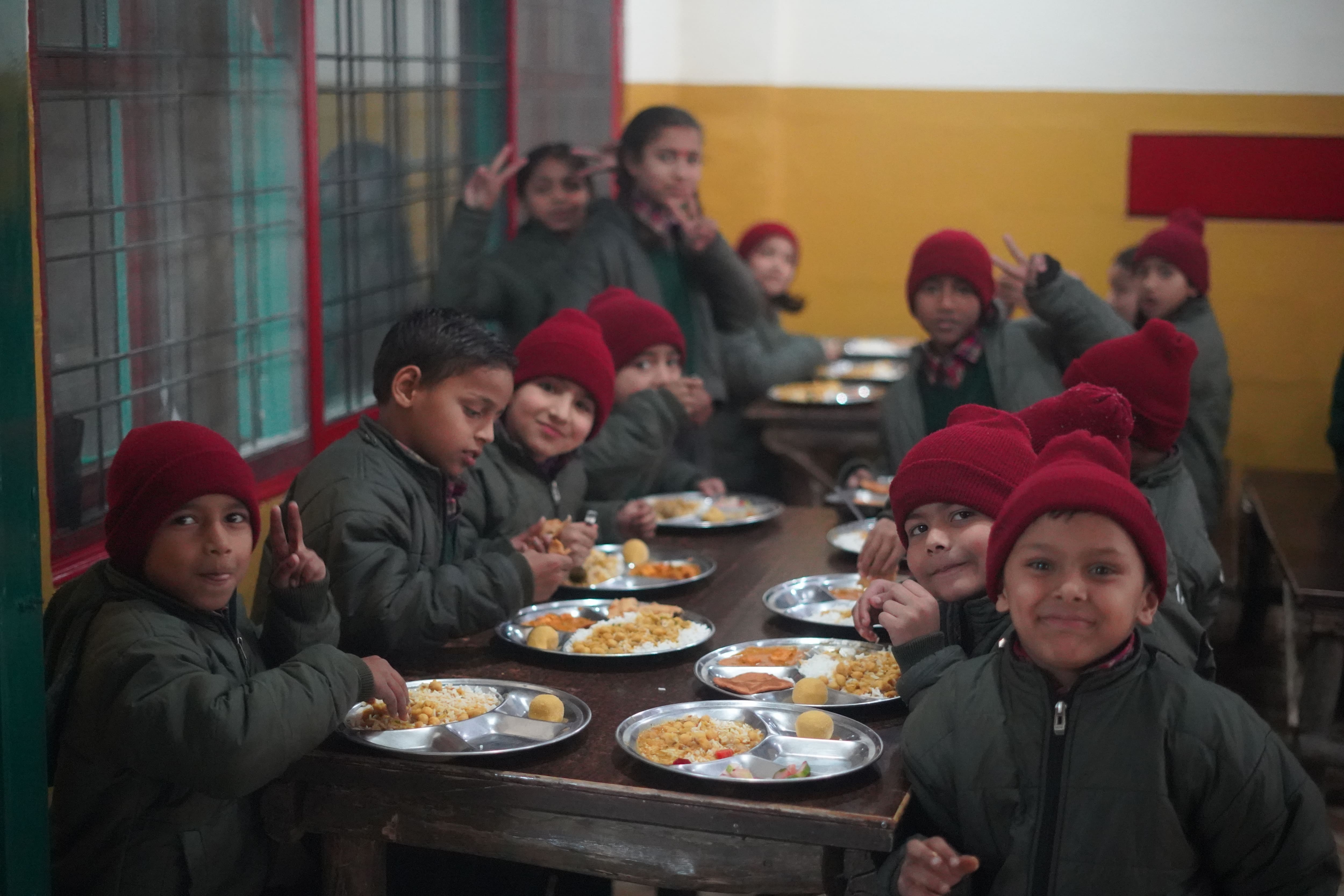
At Feeding India, we close this gap the simplest way there is: a nutritious meal, day after day. The Daily Feeding Program serves hot, freshly cooked meals every school day to children in schools and learning centres run by NGO partners across the country. The Anganwadi Program focuses on the youngest children, those under six. Alongside nutritious meals, we help make the Anganwadi centres better place to eat, play and learn, because a child's health is shaped not only by the food on their plate but by the spaces and care around them. A child who eats well daily gains healthy weight, a stronger immune system, the focus to stay in school, and a real chance to rewrite the future they were born into.
Breaking the cycle of malnutrition at the community level ensures children have the physical energy and mental focus to stay in school, learn effectively, and grow into healthy adults.